Are you looking for a newsletter strategy that gets read instead of archived? The short answer is this: pick one job for your newsletter, send it on a schedule your team can actually keep, and build a signup and welcome flow before you worry about growth hacks.
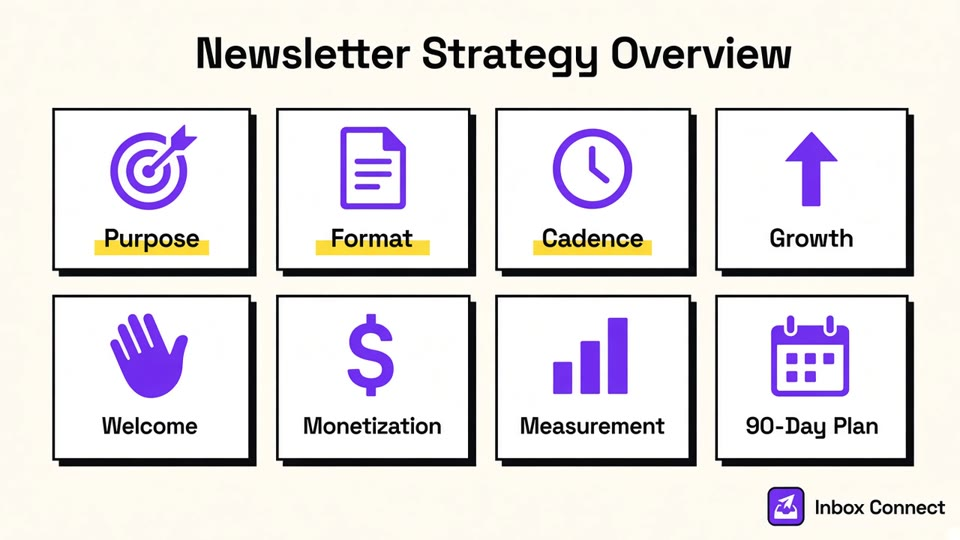
Welcome to the Inbox Connect guide to newsletter strategy. Below, you'll learn how a newsletter differs from a promo blast, which format fits your team, how to grow and monetize your list, what to measure, and a 90-day plan you can start on Monday.
tl;dr
- Pick one primary job for the newsletter: authority, traffic, nurture, or product.
- Start with a weekly hybrid format you can keep shipping for 90 days.
- Build signup promise, welcome email, and referral loop before chasing hacks.
- Track clicks, replies, net list growth, and unsubscribes more than opens.
- Monetize last, with the path that matches your audience and job.
What is a newsletter vs a promo blast?
A newsletter is a recurring email people want to read even when you have nothing to sell. A promo blast is a one-off email built to drive a single action, usually a purchase, and it only works when the offer is good.
That difference changes everything about how you write. A promo blast borrows attention, while a newsletter earns it week after week, so readers start to expect it (and notice when it doesn't show up).
Here's a quick test for your last send: if you deleted every product link, would the email still be worth opening? If not, you sent a promo blast with a newsletter header.
The comparison below shows how the two types of email differ in practice:
| Newsletter | Promo Blast | |
|---|---|---|
| Main Goal | Build trust and habit over time | Drive one action right now |
| Content | Insights, stories, curated links, tips | Offer, discount, launch, deadline |
| Cadence | Fixed schedule (weekly, biweekly) | Tied to campaigns and sales |
| Success Signal | Clicks, replies, retention, referrals | Revenue per send, conversion rate |
| Reader Feeling | "I look forward to this" | "What are they selling now?" |
| Best Platform Fit | beehiiv, Substack, Ghost | Klaviyo, Mailchimp, ecommerce ESPs |
| Risk if Overused | Low, if quality holds | High unsubscribe and spam complaint rates |
Most healthy programs run both, but they keep them separate so the newsletter never feels like a sales flyer in disguise.
The 4 jobs a newsletter can do
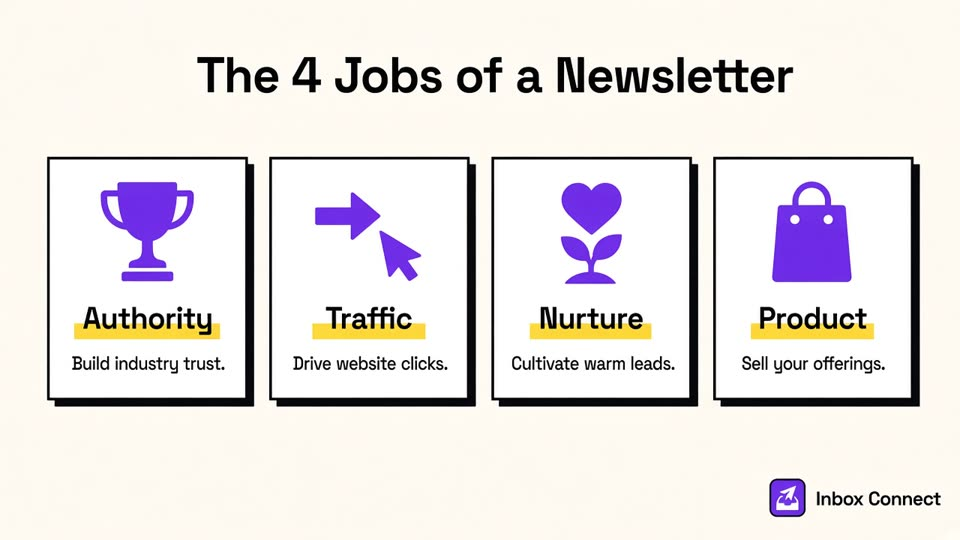
A newsletter can do one of four jobs: build authority, drive traffic, nurture buyers, or become a product of its own. The best newsletters pick one primary job and let the other three happen as side effects.
Why does this matter so much? Because every later decision, from format to metrics, depends on which job you hired the newsletter to do.
The four jobs a newsletter can do include the following:
- Build Authority: Your newsletter becomes the place your audience learns how you think. This works well for founders, consultants and B2B teams with long sales cycles, since trust is the real product.
- Drive Traffic: Each issue sends readers back to your blog, podcast or YouTube channel. Media brands and content-led SaaS teams lean on this job to turn one-time visitors into repeat ones.
- Nurture Buyers: Can an email shorten a sales cycle? It can when the newsletter answers the questions prospects ask sales anyway, so they show up to calls already warm.
- Stand Alone as a Product: Some newsletters are the business. They earn money from sponsors, paid tiers or both, and the list itself is the asset.
Format: Curated, Original or Hybrid
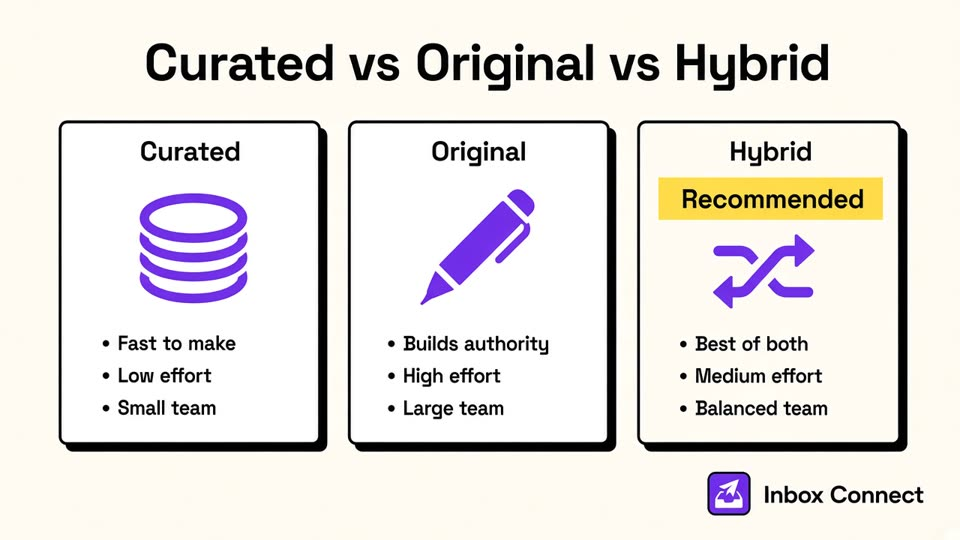
The right format is the one you can produce on schedule without burning out. For most small teams, a hybrid of one original insight plus a handful of curated links is the safest starting point.
Curated Newsletters
A curated newsletter collects the best links, tools or news in your niche and adds a short take on each. It's the fastest format to produce, and readers value it when your taste is sharper than their own feed.
Curation alone is easy to copy, though, so never ship a link without a sentence on why it matters to your reader.
Original Newsletters
An original newsletter is a single essay, case study or how-to written from your own experience. This format builds authority fastest because nobody else can write it.
It's also the hardest to sustain, so bank a few drafts before launch if you're the only writer.
Hybrid Newsletters
A hybrid newsletter opens with one original section and follows with curated links, a quick tip or a reader question. Most operator-run newsletters land here eventually because it balances voice with production speed. For layout ideas, see our newsletter template examples.
A simple hybrid newsletter structure looks like this:
- Opening Note: One short paragraph on what's on your mind this week.
- Main Story: A single original insight, lesson or teardown.
- Worth Your Time: Three to five curated links with one line of commentary each.
- One Ask: A reply prompt, referral nudge or soft offer.
You might be thinking that you'll run out of newsletter ideas by issue six. If you need prompts, browse companies newsletter ideas. You probably won't if you keep a running swipe file of customer questions, sales call notes and support tickets, since every repeated question is a future main story.
How often should you send?
Weekly is the best default cadence for most newsletters, and the best send time is whatever slot you can hold consistently. Consistency builds the reading habit faster than any "perfect" time slot found in a benchmark report.
Start with the slowest cadence that keeps you top of mind, then speed up only after 8 to 10 on-time issues.
Common newsletter cadence options include the following:
- Daily: This works for news and markets content where timeliness is the whole value. It demands a real production system, so it rarely fits a side project.
- Weekly: Weekly is frequent enough to build habit and slow enough to keep quality high.
- Biweekly or Monthly: These suit deep, research-heavy issues. The tradeoff is that readers forget who you are between sends, so your subject lines have to work harder.
For send-time, test two windows over a few weeks rather than chasing a single magic hour. Look at clicks and replies, not just opens, because opens have become a noisy signal (more on that in the measurement section).
| Cadence | Best for | Tradeoff |
|---|---|---|
| Daily | News and markets content | Needs a real production system |
| Weekly | Most operator newsletters | Needs a banked draft buffer |
| Biweekly or monthly | Deep research issues | Readers forget you between sends |
Pro tip: Put your send day in your newsletter's signup copy, like "Every Tuesday morning." It sets an expectation, and expectations are what turn subscribers into regular readers.
Growth loop: signup, welcome and referral
Newsletter growth comes from a loop, not a single tactic. List building basics still matter, so keep how to build an email list nearby while you set up the loop. You capture interest with a clear signup, earn trust with a welcome sequence, then turn happy readers into new subscribers through referrals.
When one part of the loop is weak, the rest leaks. A great referral program can't save a welcome email that never arrives, so build the loop in order.
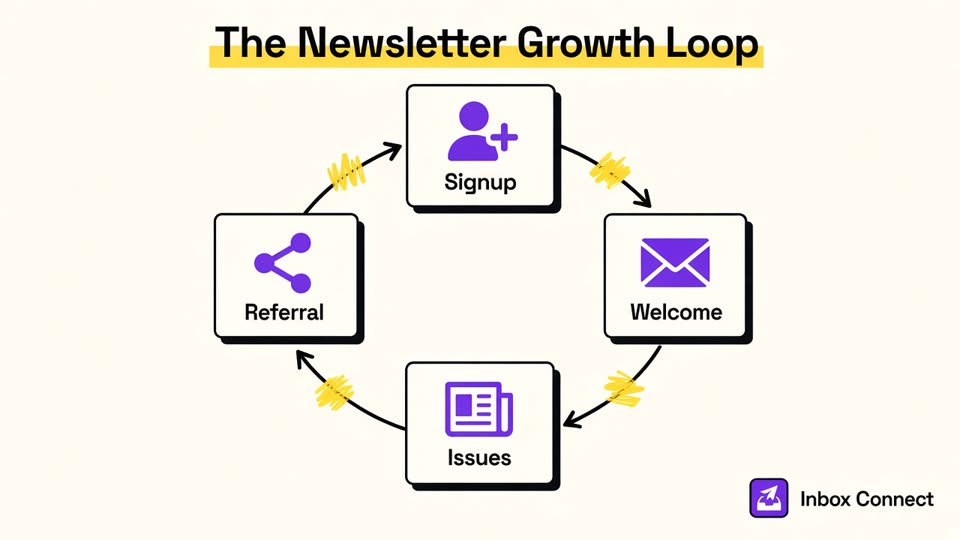
Signup: Make the Promise Specific
Your signup form should say exactly what readers get and how often. "Join our newsletter" asks for trust without giving a reason, while "One Klaviyo teardown every Tuesday, five minutes to read" gives the reader a clear trade.
Place forms where intent is already high, like the end of blog posts, a landing page, your homepage hero and social bios. Steal patterns from our newsletter sign up examples.
Welcome: Win the First Week
The welcome email gets more attention than almost any email you'll ever send, because the reader just raised their hand. Use it to confirm what's coming, link two or three of your best past issues, and ask one easy question they can answer by hitting reply.
Replies do double duty: they hand you newsletter ideas, and mailbox providers tend to treat two-way conversation as a positive signal.
Referral: Reward the Readers Who Already Love You
A referral program gives readers a reason to share, usually through milestone rewards like a resource pack, a community invite or merch. Platforms like beehiiv have referral programs built in, which saves you from stitching together third-party tools.
Keep the first reward easy to reach, because a reader who gets something useful after one referral is far more likely to chase the next tier.
Pro tip: Recommendation networks, such as beehiiv's Recommendations and Boosts, can add subscribers from other newsletters in your space. Vet partners for audience fit first, since a cheap subscriber who never opens hurts your sender reputation.
Monetization paths that fit your list
There are four main ways to make money from a newsletter: sponsorships, paid subscriptions, affiliate links and selling your own products or services. Most newsletters should start with the path that fits their audience size and the job they picked earlier.
Here's how each path works in plain terms:
- Sponsorships and Ad Networks: Brands pay to reach your readers with a placement inside the issue. You can sell sponsors directly or join a marketplace like the beehiiv Ad Network, which is useful when you don't have a sales team.
- Paid Subscriptions: Readers pay for premium issues, archives or a community. This works best when your free issues already prove the value, so the paid tier feels like more of a good thing.
- Affiliate Links: Would you recommend the tool anyway? If so, an affiliate link earns a commission without changing your content, as long as you disclose it clearly.
- Your Own Offer: For agencies, SaaS teams and creators, the newsletter often earns most by feeding the main business. One booked call or one product sale can be worth more than months of sponsor revenue.
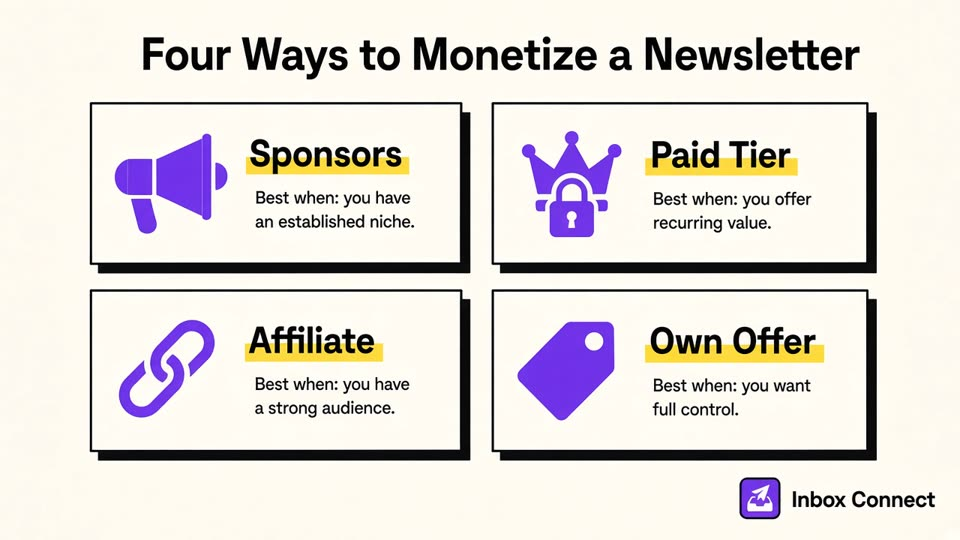
Pick one path first, and add a second only after engagement holds steady for a few months.
What should you measure?
The metrics that matter most are click rate, reply rate, list growth and unsubscribe rate, tracked as trends over time. Open rate is still useful as a rough health check, but it's no longer reliable enough to steer your newsletter strategy on its own.
Why the change? Apple's Mail Privacy Protection, launched in 2021, preloads email content for many Apple Mail users, which can count an email as opened even when nobody read it (Apple).
The newsletter metrics worth tracking include the following:
- Click Rate: Clicks show real interest in what you wrote. Track it per issue and per link to learn which topics pull readers in.
- Reply Rate: A reply is the strongest engagement signal you can get, and it feeds you content ideas for free.
- Net List Growth: New subscribers minus unsubscribes and bounces tells you whether the list is actually growing. Gross signups alone can hide a leaky bucket.
- Unsubscribe and Complaint Rate: A sudden spike usually points to a cadence change, an off-topic issue or a heavy sales push.
- Revenue or Pipeline per Issue: If your newsletter has a monetization job, connect it to dollars, booked calls or trial starts so you can defend the time it takes.
Review these numbers monthly, since single issues swing for all kinds of reasons while three-month trends tell the truth. For day-to-day sending habits, pair this with best practices for email newsletters.
A 90-day launch plan
A 90-day launch plan breaks your newsletter strategy into three phases: set up in month one, publish and learn in month two, and grow in month three. Here's the plan we use as a starting template with clients, adjusted for team size.
Days 1 to 30: Set Up the Foundation
The first month is about decisions and systems, not subscriber counts. Your setup checklist should cover the following:
- Write the One-Sentence Job: Decide whether your newsletter builds authority, drives traffic, nurtures buyers or stands alone as a product.
- Choose a Format and Cadence: Pick curated, original or hybrid, then commit to a send day you can hold for at least three months.
- Set Up the Platform: Connect your sending domain, set up SPF, DKIM and DMARC, and design one clean template.
- Bank Three Issues: Draft at least three issues before you send the first one, so a busy week never breaks your streak.
- Build the Welcome Email: Write it, test it on mobile, and send it to yourself from a fresh address.
Days 31 to 60: Publish and Learn
Month two is about shipping on schedule and listening closely. Send every issue on your chosen day, even if your list is tiny, because the habit matters more than the audience size right now.
Add signup forms to your highest-traffic pages and announce the newsletter on your social channels with a sample issue. Then read every reply, note which links get clicked, and adjust your main story topics to match.
Days 61 to 90: Grow the List
Once you've shipped 8 or so issues on time, it's time to push growth. Turn on a referral program with an easy first reward, test one recommendation partnership, and add a lead magnet if a specific topic keeps pulling clicks.
End the quarter with a simple review. Compare net list growth, click rate and reply rate against month two, decide whether to test a monetization path, and set the next 90-day goal.
FAQ
How often should I send a newsletter?
Weekly is the best default for most newsletters. It's frequent enough to build a reading habit and slow enough to protect quality, and you can always speed up once you've proven you can ship on time.
How long should a newsletter be?
A newsletter should be as long as the main idea needs and no longer. Many operator newsletters land between 300 and 1,000 words, but a tight 400-word issue people finish beats a 2,000-word issue they skim.
What should I write about in my newsletter?
Write about the questions your audience already asks you. Sales calls, support tickets, comments and reader replies are the best source of newsletter ideas because they come with proven demand.
What's the best platform for a newsletter?
For a newsletter that needs built-in growth and monetization tools, beehiiv is a strong fit thanks to its referral program, recommendations and ad network. Ecommerce brands that mainly send promos often stay on Klaviyo and run a newsletter alongside their flows.
How do I grow a newsletter from zero?
Start with a specific signup promise placed on your highest-traffic pages, then add a warm welcome email that asks for a reply. Once you've shipped consistently for a couple of months, layer in referrals and recommendation partners.
Is open rate still a useful metric?
Open rate is useful as a rough trend line, but it's inflated by privacy features like Apple Mail Privacy Protection. Click rate, replies and net list growth give you a clearer picture of how readers actually respond.
Ready to launch a newsletter people open?
You now have the full newsletter strategy, from picking a job to running a 90-day plan. Our recommendation is simple: start with a weekly hybrid newsletter on beehiiv, build the welcome email first, and add referrals in month three.
If you'd rather not build it alone, Inbox Connect can help. As a beehiiv agency, we set up your platform, sending domain, signup forms, welcome sequence and referral program, then help you plan your first quarter of issues so you launch with momentum.
Launch your newsletter with Inbox Connect Get a beehiiv setup, welcome sequence and 90-day content plan built for your audience. Book a newsletter strategy call →